Knife Crime Prevention
This resource is designed for safeguarding professionals and educators and contains sensitive content. Ensure appropriate risk assessments are completed before delivery to any audience. This page offers general educational guidance only and is not legal advice. Statistics are drawn from cited primary UK sources and may be revised as new data is published. Full terms of use apply.
Statutory Framework
This resource is aligned with the following UK statutory guidance. Follow these links to access the primary legislation.
Zombie Knives & Machetes: New Ban in Force from 24 September 2024
The Criminal Justice Act 1988 (Offensive Weapons) (Amendment) Order 2024 , made under the Offensive Weapons Act 2019, extended the ban on zombie-style knives and machetes to include private possession . From 24 September 2024, owning one of these weapons at home is a criminal offence, even if it has never left the premises.
What Is Now Banned?
- ● Zombie-style knives with blades over 8 inches
- ● Blades with a serrated cutting edge AND a sharp pointed tip
- ● Weapons marketed with zombie/gore imagery
- ● Certain machetes with no legitimate cutting purpose
Key Facts
- ● Over 118,000 weapons surrendered in the national amnesty (Home Office, 2024)
- ● Retailers face unlimited fines for continued sale
- ● Possession carries up to 4 years' imprisonment
- ● The ban follows widely reported use in fatal attacks on young people
For DSLs & teachers: Update your PSHE lesson plans and pupil-facing materials to reference this ban. Young people and parents may not be aware that previously-owned weapons are now illegal to keep. Signpost the Home Office surrender scheme for affected households.

Research & Articles
How to Talk to Your Child About Knife Crime: A Parent's Practical Conversation Guide
Age-by-age conversation scripts, what to do if your child discloses, and the legal facts every parent should know. Read the full guide →
The Roots of Violence: Why Young People Carry
Beyond the Blade, Social Determinants and Vulnerability
5 min read
The Roots of Violence: Why Young People Carry
Beyond the Blade, Social Determinants and Vulnerability
5 min read
The knife is almost never the real issue. To understand why young people carry, look at what comes before the blade: the fear, the deprivation, the adults who failed to show up, the criminal networks that did. Violence doesn't emerge from nowhere. It grows in specific conditions, and those conditions are not evenly distributed.
Fear as a Primary Catalyst
Most young people who carry knives are not planning to attack anyone. Research by the Youth Justice Board and Violence Reduction Units consistently finds that defensive carrying, carried out of fear rather than intent, is the dominant motivation. In areas where trust in the police is low, or where a young person has already been a victim of violence, a knife can feel like a rational response to a real threat. It isn't, but that's the logic operating. Dismissing it as stupidity, or responding to it purely as a disciplinary matter, gets us nowhere.
The Impact of Deprivation
The geography of knife crime is not random. High-incidence areas map closely onto concentrated deprivation, and the mechanisms are not hard to see. School exclusion is one of the clearest pathways: pupils removed from mainstream education lose both the protection of the school environment and the trusted adult relationships that can interrupt a drift toward exploitation. A decade of cuts to youth services has compounded this. Community centres, mentoring programmes, and safe spaces that once absorbed young people's time and energy have largely disappeared in the places that needed them most, leaving a vacuum that criminal networks have been willing to fill. Young people from Black and Mixed ethnic backgrounds remain over-represented in knife statistics in ways that reflect structural inequalities, not individual choices.
The Role of Exploitation
County Lines has changed knife crime in ways that aren't always understood. Children as young as 10 are recruited, often coerced, to move drugs across regional lines. For these children, the knife is not a choice. It's what the adults around them carry, what they're told they need, what marks them as belonging to something that feels, at first, like protection. Exploitation may have been ongoing for months before a school notices something is wrong.
Sources: Youth Justice Board (2024). Youth Justice Statistics 2023/24. gov.uk. | YJB Resource Hub (2025). Child First Guidance. yjresourcehub.uk. | ONS (2026). Crime in England and Wales: Year Ending December 2025. Office for National Statistics. | NCA (2024). County Lines Strategic Assessment 2024. National Crime Agency. | Home Office (2025). Serious Violence Strategy: Progress Report. gov.uk. | DfE (2025). Keeping Children Safe in Education 2025.
Left Behind: The Devastating Toll on Victims and Their Families
When a Blade Strikes, the Wounds That Never Fully Heal
7 min read
Left Behind: The Devastating Toll on Victims and Their Families
When a Blade Strikes, the Wounds That Never Fully Heal
7 min read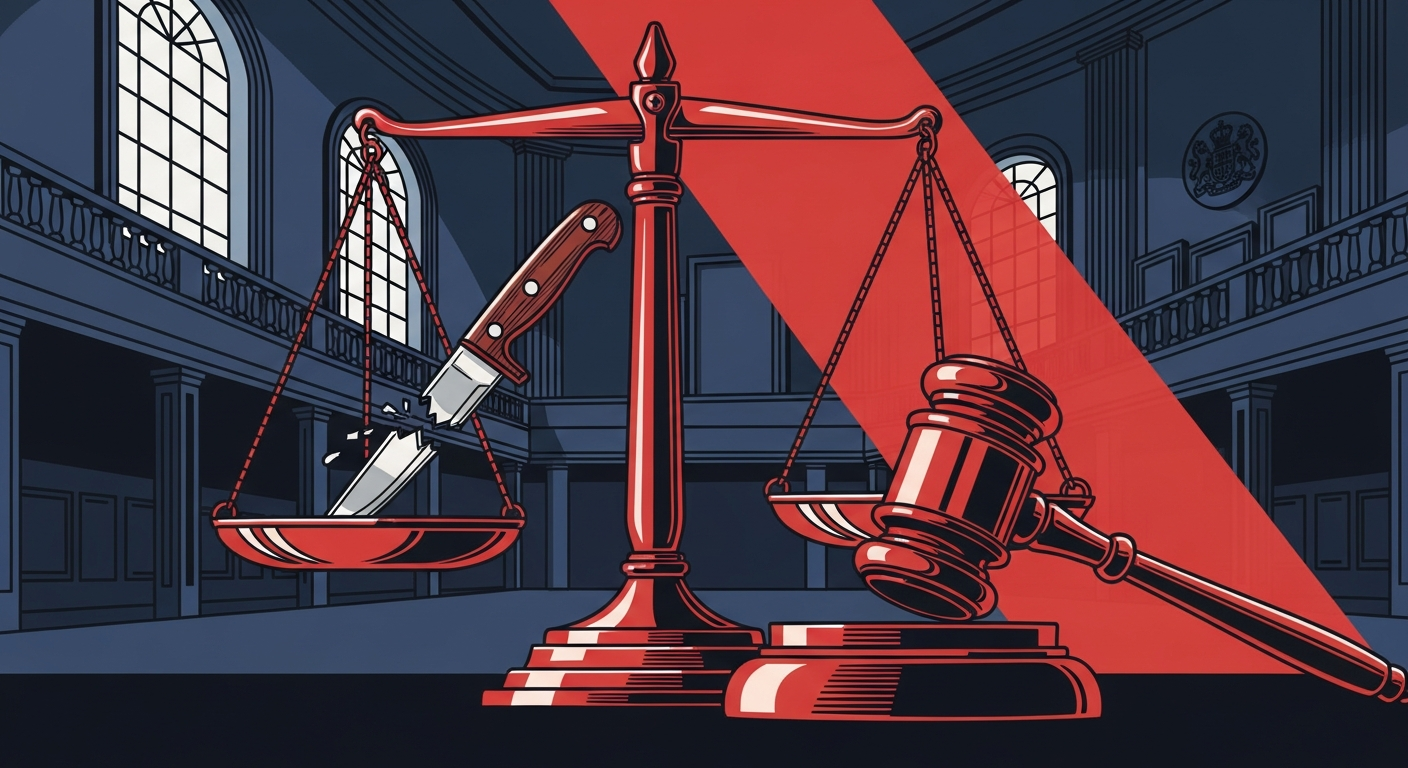
In England and Wales, around 53,000 offences involving a knife or sharp instrument were recorded in the year ending March 2025. This is equivalent to one knife crime approximately every 10 minutes (Commons Library SN04304, October 2025; ONS data). This represents a 1.2% fall on 2023/24, yet levels remain significantly elevated compared to a decade ago. Each incident leaves a circle of devastation that extends far beyond the moment itself, through families, communities, and generations.
Media coverage of knife crime tends to follow a familiar pattern: a headline, a photograph, a postcode. Within days, the story fades. But for the families left behind, the story doesn't end. Parents who identified a body, siblings who watched a brother or sister fight for life in intensive care, friends who will never quite be the same all carry the impact forward.
The Physical Reality of a Stab Wound
A knife wound is not what television makes it look like. A single stab wound to the torso can sever major blood vessels, puncture a lung, rupture the liver, or damage the spinal cord, sometimes all at once. Trauma surgeons describe knife injuries as among the most complex and unforgiving wounds they treat. Survival depends heavily on proximity to a major trauma centre and how quickly bystanders act.
Even those who survive face long and painful recoveries. Nerve damage can cause permanent disability. Collapsed lung injuries leave lasting breathing difficulties. Many survivors describe chronic pain years after the incident. A young person who is stabbed at 16 may carry the physical consequences for the remaining six or seven decades of their life.
The Psychological Aftermath for Survivors
Physical wounds, however severe, are only part of what a survivor must contend with. PTSD is the most commonly documented consequence. Flashbacks and hypervigilance make ordinary life feel impossible: school, commuting, a busy bus. Many young survivors describe being unable to return to the street where it happened. What was once a sociable young person can become entirely withdrawn, with deteriorating relationships, collapsing academic performance, and ambitions that felt possible before the attack suddenly out of reach.
Where a friend was killed in the same incident, survivors frequently carry profound guilt about their own survival. Without professional support, that guilt follows a well-documented trajectory toward self-harm and suicidal ideation. If the perpetrator or their associates remain present in the community, the threat of re-victimisation is not irrational. That fear traps young people in patterns of anxiety. In some cases, anxiety pushes them toward carrying a weapon themselves. The thing that harmed them becomes the thing they feel they need.
Bereaved Parents: A Grief Like No Other
The death of a child is described by bereavement specialists as the most severe form of grief a human being can experience. When that death is sudden, violent, and entirely preventable, the trauma is compounded in ways that are difficult to overstate.
The grief that follows sudden, violent bereavement resists the patterns counsellors usually work with. Many bereaved parents describe being frozen at the moment the news arrived, unable to move through loss in any conventional way. For those who viewed their child's body or were present at the scene, graphic and unwanted mental images compound the grief as a distinct form of trauma. Then comes the criminal justice process: court appearances, proximity to the person who killed their child, appeals that can extend the ordeal for years. Justice, when it arrives, rarely brings the closure families hoped for.
Running beneath all of this is financial strain that rarely gets discussed. Extended leave from work, sometimes permanent. Funeral costs. Travel to court. Private counselling, because statutory mental health services, already under pressure, rarely provide the depth of support these families need. Some parents never return to the lives they had. The damage is total.
Siblings and the Hidden Victims
The impact on brothers and sisters is one of the least-discussed consequences of knife crime. Research from Grief Encounter consistently finds significant educational disruption: school avoidance, falling grades, exclusion in the worst cases. Bereaved siblings often present with aggression and risk-taking that can look like conduct disorder but is rooted in grief and a destabilised sense of their own safety. Without support, a profound sense of injustice can develop and become a reliable pathway toward thoughts of retaliation.
These children are secondary victims in every meaningful sense, yet they rarely receive the same recognition or support as bereaved adults. Schools may not be told what has happened. Counselling referrals may not be made. The full weight of a family's grief presses down on a child who has no language yet for what they are carrying.
Community-Level Trauma
The consequences of knife crime are not contained within individual households. Research into community trauma, sometimes called vicarious trauma, shows that neighbourhoods which experience repeated incidents of serious youth violence suffer measurable collective harm. Residents become reluctant to use public spaces. Local businesses close early or relocate. Teachers and youth workers report burnout driven by the accumulated weight of attending to traumatised young people.
In communities where violence has become normalised, young people develop a distorted understanding of risk and consequence. What should be shocking becomes routine. This desensitisation is itself a form of harm, one that makes future violence more, not less, likely.
The Perpetrators' Families: A Toll Rarely Acknowledged
It would be incomplete to discuss the consequences of knife crime without acknowledging the families of those who carry and use blades. Parents and siblings of young people who are imprisoned for knife offences face stigma, shame, and often a grief of their own: the loss of a child not to death, but to the criminal justice system. Mothers who watch a son sentenced to years in custody describe an experience of helplessness that mirrors, in some ways, the grief of bereavement. These families, too, are left behind.
What Needs to Change
Young people who are close to knife crime, who have friends who carry, who've been threatened, or who've seen it happen, are not unaware of the consequences. They've often seen them close up. What they sometimes lack is an adult who takes that seriously, asks the right questions, and knows what to do with the answers. A skilled DSL or youth worker can genuinely change the trajectory. The evidence on deterrence is unambiguous: fear of prosecution doesn't stop a young person who is already afraid for their safety. Humanising the cost does.
If a young person in your setting has been directly or indirectly affected by knife crime, treat it as a safeguarding concern, not just a pastoral one. The trauma is real, often hidden, and does not resolve without support. Contact your local MASH team in the first instance. Don't wait until the impact becomes visible.
Sources: NHS England (2024). Trauma-Informed Care for Young People. NHS England. | NSPCC (2024). Knife Crime: How to Keep Children Safe. nspcc.org.uk. | Grief Encounter (2023). Bereaved Siblings: Research and Support. griefencounter.org.uk. | Victims' Commissioner (2024). Support for Survivors of Violent Crime. victimscommissioner.org.uk. | HM Government (2023). Victim Support Services for Violent Crime. gov.uk. Last reviewed: May 2026.
Knife Crime Statistics in 2026
Decoding the Data Behind the Headlines
6 min read
Knife Crime Statistics in 2026
Decoding the Data Behind the Headlines
6 min read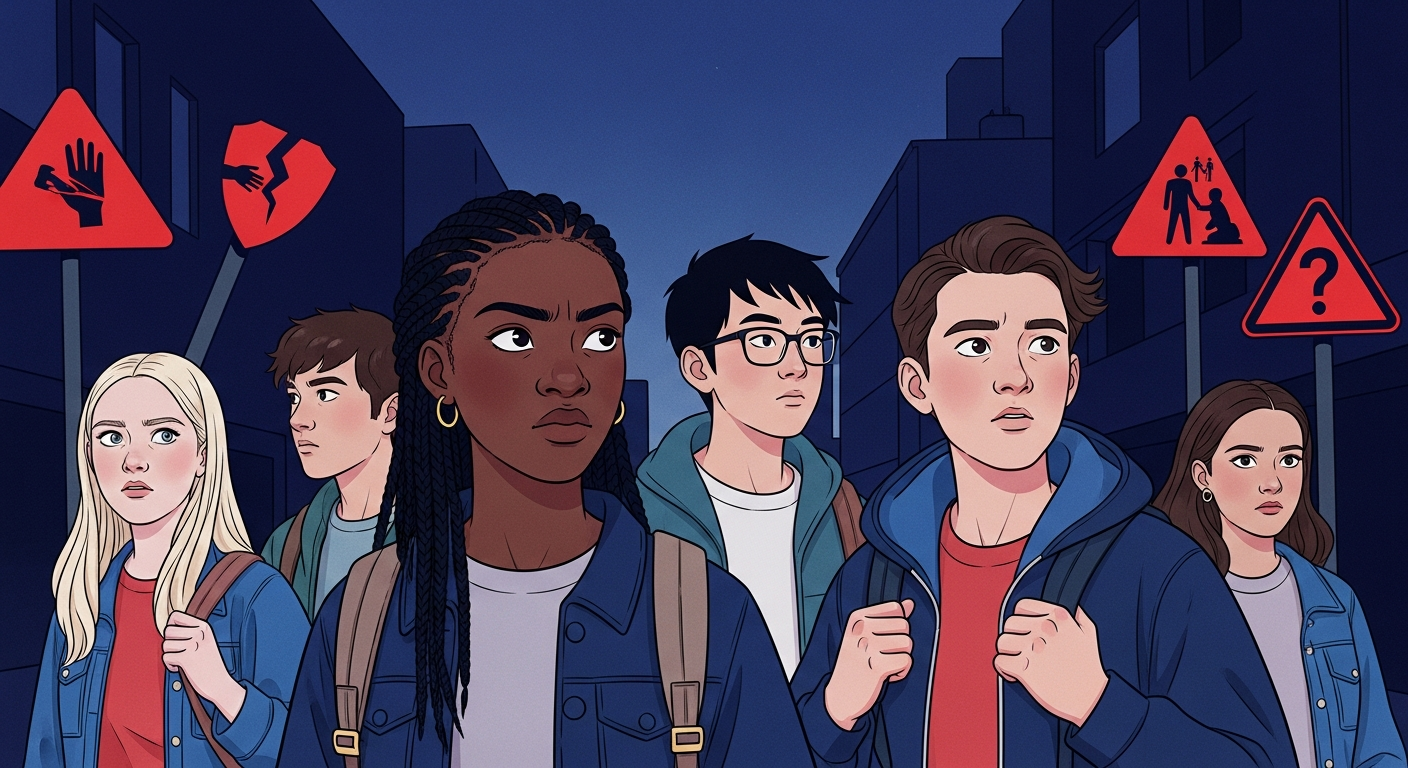
The headline numbers on knife crime are often misread. A small fall in police-recorded offences gets framed as progress; a rise in prosecutions gets misread as a new wave of violence. What the ONS and Ministry of Justice data actually shows is a picture of stubborn, elevated harm that has not meaningfully improved in a decade, whatever the political framing of the moment.
Current Trends and Key Figures
For the year ending September 2025, the Criminal Justice System (CJS) dealt with approximately 20,771 knife and offensive weapon offences . This represents a marginal increase of 1.5% from the previous year and a 21.5% rise over the last decade. These figures represent offences processed through the criminal justice system, a subset of the approximately 53,000 police-recorded knife offences for the same period (Commons Library, 2025). Not all recorded offences result in a charge or prosecution.
Regional Hotspots
- Cleveland: Now records the highest national rate of "assault with injury" involving a knife.
- Manchester: Reports a Violent Crime Rate (VCR) of 13.8 per 1,000 residents.
- South Yorkshire: Ranks third for overall knife-related incidents per capita.
Sentencing and Justice
The legal response to knife crime has become increasingly rigorous. In the year ending December 2024, 30.9% of all knife and offensive weapon convictions resulted in immediate custody, and 68% of those dealt with were first-time offenders, the lowest proportion in a decade (MoJ, May 2025). Average custodial sentences diverge significantly by age:
- ● Adults (18+): average 8.1 months, up 8.7% over ten years
- ● Young people (10, 17): average 7 months, down 2.5% over the same period, reflecting youth court's welfare-centred approach
Mandatory minimums (s.315 Sentencing Act 2020): A second or subsequent knife possession conviction triggers a mandatory minimum of 6 months for adults; a 4-month Detention and Training Order for 16, 17 year olds. Courts may only depart if applying the minimum would be unjust. Child welfare matters most for under-16s, who face no mandatory minimum.
Knife Crime Prevention Orders (KCPOs) under the Offensive Weapons Act 2019 can be imposed on anyone aged 12 and over without a criminal conviction. Orders restrict movement, associations, and internet use for 1, 5 years. Breaching a KCPO carries up to 2 years in custody.
Sources: Ministry of Justice (May 2025). Knife and Offensive Weapon Sentencing Statistics: October to December 2024. gov.uk. | Sentencing Act 2020, s.315 (mandatory minimums); Offensive Weapons Act 2019, Part 1 (KCPOs). | ONS (2025). Crime in England and Wales: Year Ending September 2025. Last reviewed: June 2026.
Understanding the Issue
Knife crime among young people remains at historically elevated levels across the UK. The gradual fall in police-recorded figures is real but modest, and it tells you little about the fear that persists in schools, on public transport, and in the streets between them. Most young people who carry do so out of fear, not aggression. This matters because how you respond to a frightened child is very different from how you respond to a threatening one.
Youth Justice Board: The "Child First" Approach to Knife Crime
The Youth Justice Board (YJB) places the Child First principle at the heart of the youth justice system's response to knife crime. This means treating children who carry or use knives as children first, recognising that many are themselves victims of exploitation, trauma, or coercive control, and responding with trauma-informed, diversion-focused support rather than defaulting to prosecution.
What Child First Means in Practice
- • Defensive carrying is the most common motivation: fear, not aggression.
- ● Children in the justice system are often victims of exploitation or abuse
- ● Trauma-informed responses reduce re-offending more effectively than custody
- ● Diversion over prosecution where the child's welfare is the primary concern
YJB Prevention and Diversion Assessment Tool (PDAT)
- ● New YJB tool to assess risk, resilience, and diversion needs for young people
- ● Designed for use by youth justice practitioners, DSLs, and multi-agency teams
- ● Supports early identification before a child enters the formal justice system
- ● Available via the YJB Resource Hub ↗
For DSLs: When a young person is found with a knife, consider whether exploitation, coercion, or significant emotional harm is a factor before taking a purely punitive approach. Refer to your MASH team and consider the YJB's Child First guidance alongside your school's serious incident protocol.
Key Statistics (2024 to 2025)
- • Around 53,000 offences involving a knife or sharp instrument, year ending March 2025. This represents a 1.2% decrease from 2023/24 and a 3.8% decrease from the 2019/20 pre-pandemic level (Commons Library SN04304, October 2025).
- • 262 homicides by sharp instrument in 2023/24: 46% of all 570 homicides in England and Wales (Home Office, Homicide in England and Wales, year ending March 2024).
- • NHS England recorded 3,500 hospital episodes for sharp object assaults in 2024/25, a 10.4% decrease year-on-year (NHS England, HES 2024/25)
- • 18% of cautions and convictions for knife possession are juveniles aged 10, 17 (Ministry of Justice, year ending March 2023)
- • Metropolitan Police: 182 offences per 100,000 population (highest rate nationally). Cumbria: 31 per 100,000, the lowest (ONS, 2024/25).
- • Peak age for knife-related incidents: 16 to 17 years old
Sources: Commons Library Research Briefing SN04304 (October 2025); ONS, Crime in England and Wales; Home Office Homicide Index; NHS England Hospital Episode Statistics 2024/25; Ministry of Justice Criminal Justice Statistics.
Lesson Plan Outline
Session Structure (90 minutes)
Part 1: Introduction (15 mins)
Ground rules, safe space agreement, anonymous question box
Part 2: Legal Consequences (20 mins)
Sentencing Act 2020 s.315 mandatory minimums, KCPO powers, youth court disposals, case studies
Part 3: Real-World Impact (25 mins)
Video testimony, medical professional input, "myth of protection"
Part 4: Alternatives & Support (20 mins)
Exit strategies, de-escalation, local support services
Part 5: Q&A and Close (10 mins)
Anonymous questions, resource distribution, follow-up signposting
MASH Referral Indicators
Consider immediate MASH referral if a young person:
- • Discloses carrying a weapon currently
- • Reports threats or intimidation from others
- • Shows unexplained injuries consistent with violence
- • Expresses fears about travelling to/from school
- • Has known associations with gang-involved individuals
Articles on This Topic
In-depth guides and commentary from The Safeguard Hub.
- → Knife Crime: The Latest Statistics & Safeguarding Response (Updated June 2026)
- → How to Talk to Your Child About Knife Crime
- → Child Criminal Exploitation: What It Is & How to Spot It
- → First Aid for Knife Wounds: What Every School Staff Member Needs to Know