First Aid for Knife Wounds: What Every School Staff Member Needs to Know
When a stabbing happens near school grounds, the first three minutes are critical. This practical guide, aligned with St John Ambulance and NHS guidance, walks staff through the immediate actions that save lives before paramedics arrive.
⚠️ Clinical & Legal Disclaimer, Read First
This article provides general awareness information only. It does not replace qualified first aid training and must not be used as a substitute for it. All first aid guidance should be verified against current Resuscitation Council UK and British Red Cross protocols. In any emergency, call 999 immediately . School staff should be trained by a certified first aid provider; this article supplements but does not replace that training. The Safeguard Hub accepts no clinical or legal liability for actions taken in reliance on this article.
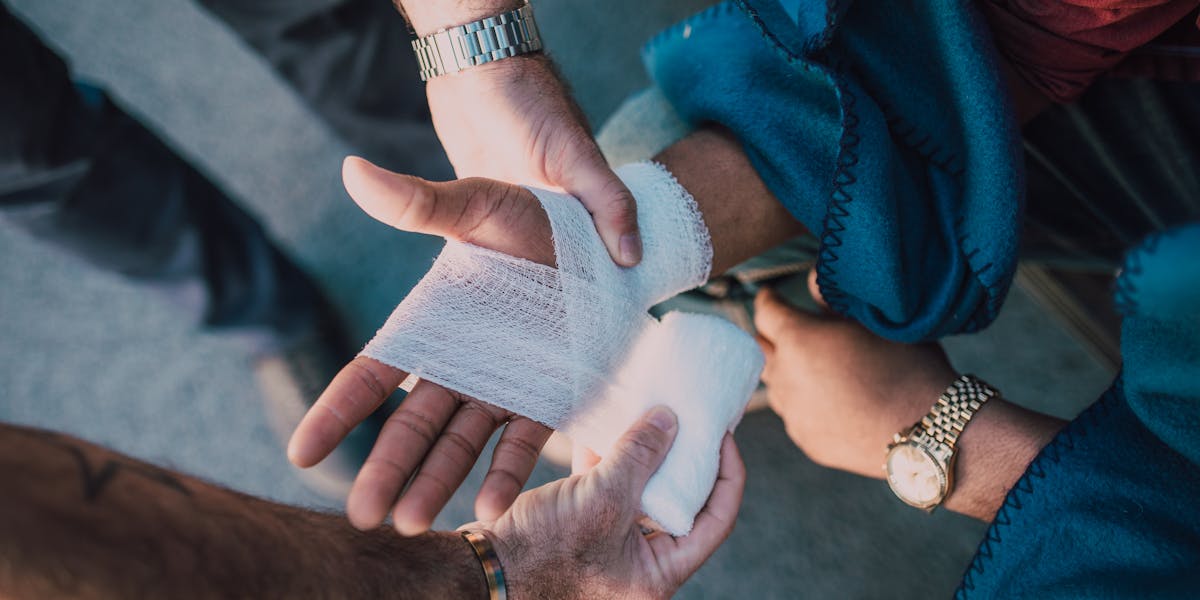
Photo: Pexels, paramedic first aid emergency response
⚠ Call 999 immediately. Do not remove any embedded weapon. Do not move the victim unless there is an immediate further threat.
Why Every Staff Member Needs This Knowledge
Between April 2023 and March 2024, there were 50,489 knife offences recorded in England and Wales . [1] In a stabbing, irreversible blood loss can occur within three to five minutes. The NHS estimates that for every minute without bleeding control, survival odds fall by approximately 10%. [2] All school staff, not just trained first aiders, need to know the basic steps.
DRABC: The Life-Saving Framework
D, Danger:
Check the scene is safe. If an attacker is still present, do not approach. Call 999 and direct others away.
R, Response:
Call out: "Can you hear me? Open your eyes." Tap their shoulders. No response = unconscious, move to Airway.
A, Airway:
Tilt the head back gently and lift the chin. Look, listen, feel for breathing for no more than 10 seconds.
B, Breathing:
Not breathing → begin CPR. Breathing → recovery position unless spinal injury is suspected.
C, Catastrophic Bleeding:
Apply direct firm pressure immediately using clothing, a bag, anything available. Do not remove dressing once applied; add more material on top if it soaks through.
Controlling Severe Bleeding
- Apply direct, firm pressure and maintain it continuously until paramedics arrive. Do not check if it has stopped.
- Never remove the weapon as it may be plugging the wound. Removal can cause sudden catastrophic haemorrhage.
- Raise the limb if the wound is on an arm or leg and this does not cause further distress.
- Talk to the casualty to keep them calm and conscious, which reduces heart rate and slows blood loss.
Chest Wounds: Signs of Tension Pneumothorax
A sucking or hissing sound from a chest wound indicates air entering the chest cavity. Cover the wound with a non-porous material (credit card, cling film) taped on three sides to allow air out but not in. Tell 999 immediately.
After the Incident
- Arrange immediate psychological first aid for all staff involved
- Complete a RIDDOR report if the incident occurred on school premises
- Refer to MASH if the victim is a pupil with exploitation or vulnerability concerns
Citations
[1] ONS (2024). Crime in England and Wales, Year Ending March 2024. ONS.
[2] NHS England (2023). Bleed Control: Save a Life. NHS England.
[3] St John Ambulance (2024). How to Treat a Stab Wound. sja.org.uk.
[4] British Heart Foundation (2023). First Aid: Bleeding Guide. bhf.org.uk.