County Lines Exploitation
This resource is general educational guidance for safeguarding professionals and educators, not legal advice. Statistics are drawn from cited primary UK sources (NCA, ONS, Children's Commissioner) and are subject to revision as new data is published. Full terms of use apply.
Statutory Framework
This resource is aligned with the following UK statutory guidance. Follow these links to access the primary legislation.

Research & Articles
The Logistics of the Line: How County Lines Operates
Understanding the 'Line' and its Infrastructure
5 min read
The Logistics of the Line: How County Lines Operates
Understanding the 'Line' and its Infrastructure
5 min read
"County Lines" is a term that has become synonymous with a specific, highly organised method of drug distribution in the UK. At its core, it is a business model built on the exploitation of geography and technology. The "line" refers to a mobile phone, the dedicated link between urban drug wholesalers and rural or coastal consumers, often involving young people in financial exploitation.
The Hub-and-Spoke Model
The operation typically follows a "hub-and-spoke" architecture. The urban gang acts as the hub, managing the supply chain and the "deal line" phone. The spokes are the various rural towns where demand is high but local supply is inconsistent.
The "deal line" is the most valuable asset. It is the brand. If a gang member is arrested, the phone is often the first thing they try to destroy or hide, because the thousands of contacts on that SIM card represent the entire revenue stream of the operation.
The Role of "Cuckooing"
A central component of the county lines infrastructure is "cuckooing." This is a practice where gang members take over the home of a vulnerable person, often someone with mental health issues, physical disabilities, or substance addictions, to use as a base for operations.
Sources: NCA (2024). County Lines Strategic Assessment 2024. National Crime Agency. | Home Office (2024). Drug Strategy 2021: Progress Review. gov.uk. | HM Government (2023). Modern Slavery Act 2015 Annual Report. gov.uk. | Missing People (2024). Children Missing from Care and Home. missingpeople.org.uk.
The Human Cost: Exploitation and Grooming
Beyond the Headlines: The Reality for Young People
6 min read
The Human Cost: Exploitation and Grooming
Beyond the Headlines: The Reality for Young People
6 min read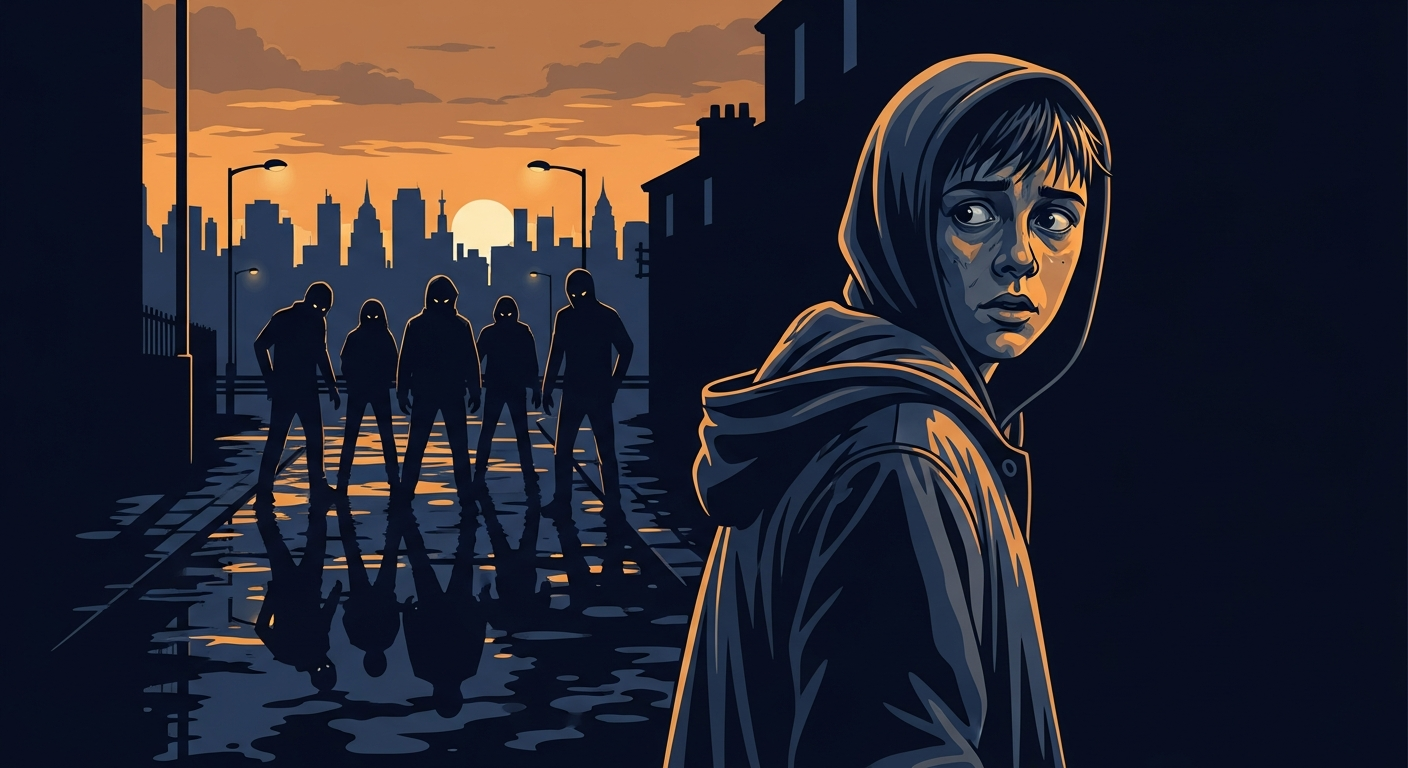
While county lines is often discussed in terms of crime statistics , its true nature is a form of modern slavery. The model relies almost entirely on the exploitation of children and vulnerable adults to move "product" and cash.
The Grooming Process
The recruitment of young people into county lines is rarely immediate. It is a calculated process of grooming. Gang members identify vulnerable youths: those in the care system, those struggling at school, or those facing poverty. They offer a sense of belonging, protection, or "easy" money.
Initially, the tasks are small: "Watch this bag for ten minutes," or "Carry this phone for me." These tasks are rewarded with expensive trainers, clothes, or cash. This creates a "debt" or a sense of loyalty.
The "Trap House" and the Road
Children as young as 10 (NCA, 2024) are sent hundreds of miles away from home to live in "trap houses" (cuckooed properties). They may stay there for weeks at a time, living in squalor, surrounded by violence, and tasked with selling Class A drugs to local users.
Sources: NCA (2024). County Lines Strategic Assessment 2024. | NSPCC (2024). Child Criminal Exploitation and County Lines. nspcc.org.uk. | Catch22 (2023). County Lines: The Experience of Children. catch-22.org.uk. | DfE (2024). Child Criminal Exploitation: Definition and Guide for Practitioners. gov.uk.
The Evolving Frontline: Policing and Prevention
Tactics in the Fight Against Distributed Crime
5 min read
The Evolving Frontline: Policing and Prevention
Tactics in the Fight Against Distributed Crime
5 min read
As county lines gangs have become more sophisticated, law enforcement has had to move beyond traditional "boots on the ground" policing to a more intelligence-led, multi-agency approach.
Data and Telecommunications
Since the "line" is the heart of the operation, digital forensics has become a primary weapon. Police forces now work closely with telecommunications providers to track the movement of deal lines.
The National County Lines Co-ordination Centre (NCLCC)
Launched to create a unified response, the NCLCC allows different police forces to share intelligence seamlessly. Since county lines inherently cross borders, traditional localized policing was often ineffective.
Safeguarding as a Priority
Police are now trained to look for signs of exploitation during drug raids. When a teenager is found in a trap house, safeguarding takes priority. They are removed from the environment and into the care of social services.
Sources: NCA (2024). National County Lines Co-ordination Centre: Annual Report 2024. | Home Office (2023). Serious Violence Strategy: County Lines. gov.uk. | College of Policing (2023). Knife Crime and County Lines: Authorised Professional Practice. | HM Government (2026). Working Together to Safeguard Children 2026.
County Lines is a form of criminal exploitation where urban gangs establish drug dealing networks in smaller towns and rural areas, using children and vulnerable adults to transport and sell drugs.
Understanding 'Cuckooing'
Cuckooing is the practice where drug dealers take over the home of a vulnerable person to use as a base for drug dealing operations.
Common Targets for Cuckooing:
- • Adults with drug or alcohol dependency
- • People with mental health issues living alone
- • Elderly or isolated individuals
- • Single parents in financial difficulty
- • Young people in care or leaving care
Signs of County Lines Exploitation
Behavioural Signs
- • Persistently going missing or returning late
- • Unexplained absences from school
- • Significant changes in emotional well-being
- • Becoming withdrawn and secretive
- • Receiving excessive texts or phone calls
Physical Signs
- • Unexplained money, clothes, or mobile phones
- • Multiple mobile phones or SIM cards
- • Possession of drugs or weapons
- • Injuries they cannot explain
- • Train tickets to unfamiliar locations
MASH Referral Protocol
Under MASH protocols, suspected County Lines involvement should trigger:
- • Immediate safeguarding referral to local authority children's services
- • Information sharing with Police via MASH
- • NRM (National Referral Mechanism) referral consideration for modern slavery
- • Multi-agency strategy meeting within 24 hours
- • Safety planning for the young person and their family
Articles on This Topic
In-depth guides and commentary from The Safeguard Hub.
- → What Is County Lines? A Complete Guide for Schools & Parents
- → County Lines 2024: NCA Data & How Schools Must Respond
- → County Lines Warning Signs: A Parent's Guide
- → Child Criminal Exploitation: What It Is & How to Spot It