Nitrous Oxide, Laughing Gas and New Psychoactive Substances: What Parents and Schools Need to Know in 2026
Since nitrous oxide became a Class C drug in England and Wales in 2023, awareness has grown. Understanding of the real health risks, legal position and safeguarding implications remains uneven. This guide covers everything professionals and parents need.
Legal Status, England and Wales
Nitrous oxide became a Class C controlled drug under the Misuse of Drugs Act 1971 in November 2023, via the Misuse of Drugs Act 1971 (Amendment) Order 2023 (SI 2023/1091), which came into force on 8 November 2023. Supply, possession with intent to supply, and production are all now criminal offences. Simple possession for personal use is also an offence for Class C drugs, though charging decisions remain at police discretion.
How Prevalent Is It? The UK Data
Use among 16, 24 year olds has fallen considerably from its 2019/20 peak of around 9%. The ONS Crime Survey for England and Wales recorded 3.3% in the year ending March 2024, down from 3.9% two years earlier. [1] This decline pre-dates the 2023 reclassification, suggesting social trends and awareness initiatives have had some impact alongside the legal change.
Among 11, 15 year olds, 1.6% reported using nitrous oxide in the most recent NHS/Re-Solv survey data available. [2] For a substance that can be bought cheaply online, found discarded in parks, and does not require any special knowledge to use, this represents a meaningful safeguarding risk for younger secondary school pupils.
What Is Nitrous Oxide and How Is It Used?
Nitrous oxide (N₂O) is a colourless gas with a slightly sweet smell, used legitimately in medicine (as an anaesthetic) and in catering (as a propellant in cream chargers). When misused, it is typically inhaled from small metal canisters (known as "nangs," "whippets" or "laughing gas canisters") into balloons and then breathed in. The effect is a short dissociative high, typically lasting 15, 30 seconds, accompanied by dizziness and sometimes hallucinations.
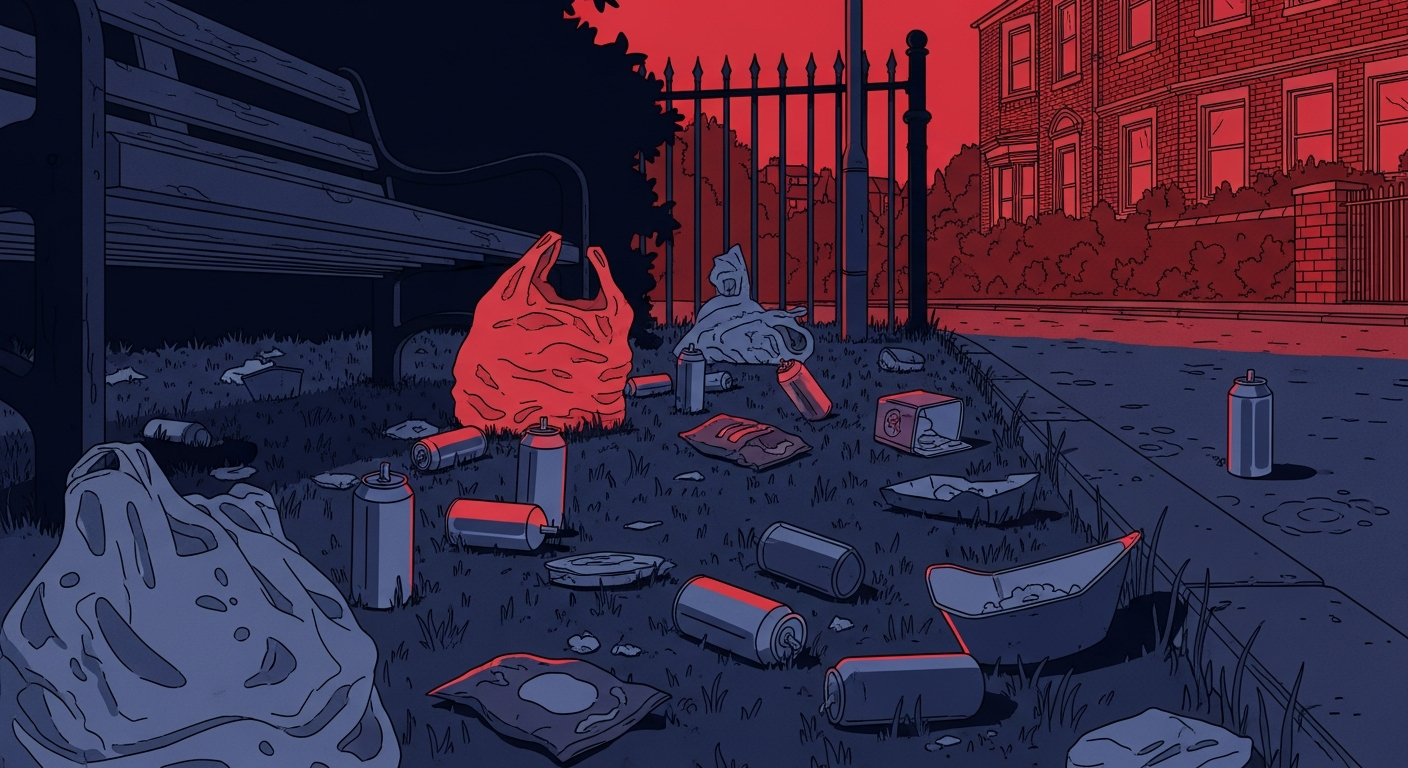
The distinctive small silver canisters are the most visible physical indicator of use. They are commonly found discarded in parks, outside schools and in car parks. Larger "industrial" canisters (often bright blue or coloured) are also in circulation and deliver a much larger dose, carrying correspondingly higher risks.
The Real Health Risks: What Many People Don't Know
Nitrous oxide is widely mischaracterised as a "safe" or "soft" drug by young people. The actual risk profile is more serious than this perception suggests:
- Vitamin B12 depletion: Nitrous oxide inactivates vitamin B12, which is essential for nerve function. Regular or heavy use, even over a relatively short period, can cause severe and sometimes irreversible neurological damage. This includes a condition called subacute combined degeneration of the spinal cord (SACDSC). Cases of young people presenting with significant neurological impairment following heavy nitrous oxide use have been widely reported in clinical literature since 2020.
- Asphyxiation risk: Inhaling directly from a canister or in an enclosed space can displace oxygen and cause loss of consciousness or death. Several deaths in the UK have been attributed to nitrous oxide use in enclosed environments.
- Frostbite: The gas expands rapidly when released and becomes extremely cold. Inhaling directly from a canister can cause frostbite to lips, mouth, and airways.
- Cardiovascular risk: There is evidence of cardiac risk at high doses, particularly in people with pre-existing heart conditions.
- Psychological dependence: While physical dependence is uncommon, psychological dependence, particularly in people using it to manage anxiety or dissociate from distress, has been documented.
New Psychoactive Substances (NPS): The Wider Picture
Nitrous oxide sits within the broader category of New Psychoactive Substances (NPS): substances designed to mimic the effects of established controlled drugs. The Psychoactive Substances Act 2016 made the supply of most NPS illegal in the UK, but the market adapts rapidly, with new substances regularly appearing that fall outside existing definitions.
Current NPS of concern among young people in the UK include synthetic cannabinoids (such as "spice" or "black mamba"), synthetic opioids, and novel stimulants. These substances carry unpredictable and severe effects, including seizures, psychosis and cardiac arrest. Their chemical composition is variable and users have no reliable way of knowing what they have taken or at what dose.
The safeguarding relevance is heightened by the fact that NPS are frequently used within contexts of exploitation. County lines operations in particular have been linked to deliberate supply of NPS to young people as a method of control.
Warning Signs of Nitrous Oxide or NPS Use
Physical Signs
- • Small silver canisters or deflated balloons in their possession or room
- • Tingling or numbness in hands or feet (B12-related nerve damage)
- • Dizziness, disorientation or confusion without obvious cause
- • Frostbite marks around the mouth or lips
- • With NPS: sudden severe agitation, psychosis or collapse
Behavioural Signs
- • Group use in parks, car parks or secluded areas. Nitrous oxide is typically a social drug.
- • Dismissiveness about risk: "it's just laughing gas, it's not a real drug"
- • Frequent short absences from class or family time
- • Memory or concentration problems inconsistent with their normal pattern
What to Do
If a young person is found with nitrous oxide canisters or balloons, or discloses use to you:
- In a school setting, report to your DSL immediately. Do not take a punitive approach before the safeguarding context has been assessed: use may be a symptom of exploitation or other harm.
- If the young person shows signs of neurological symptoms (numbness, tingling, weakness), refer them to their GP or A&E promptly. B12-related nerve damage is treatable if caught early.
- If a young person is found unconscious or unresponsive in connection with any substance use, call 999 immediately.
- Refer to local young people's drug and alcohol services for assessment and support. FRANK can help locate the nearest service.
Who to Contact
Citations
[1] ONS (2024). Drug Misuse in England and Wales: Year Ending March 2024. Office for National Statistics / Crime Survey for England and Wales.
[2] NHS / Re-Solv (2023). Smoking, Drinking and Drug Use Among Young People in England. NHS Digital.
Legislation: Misuse of Drugs Act 1971 (Amendment) Order 2023 (SI 2023/1091) / Misuse of Drugs Act 1971 / Psychoactive Substances Act 2016.