Fabricated or Induced Illness (FII): A Safeguarding Guide for DSLs and Schools
By The Safeguard Hub Team · June 2026 · Last reviewed June 2026 · ⏳ 16 min read
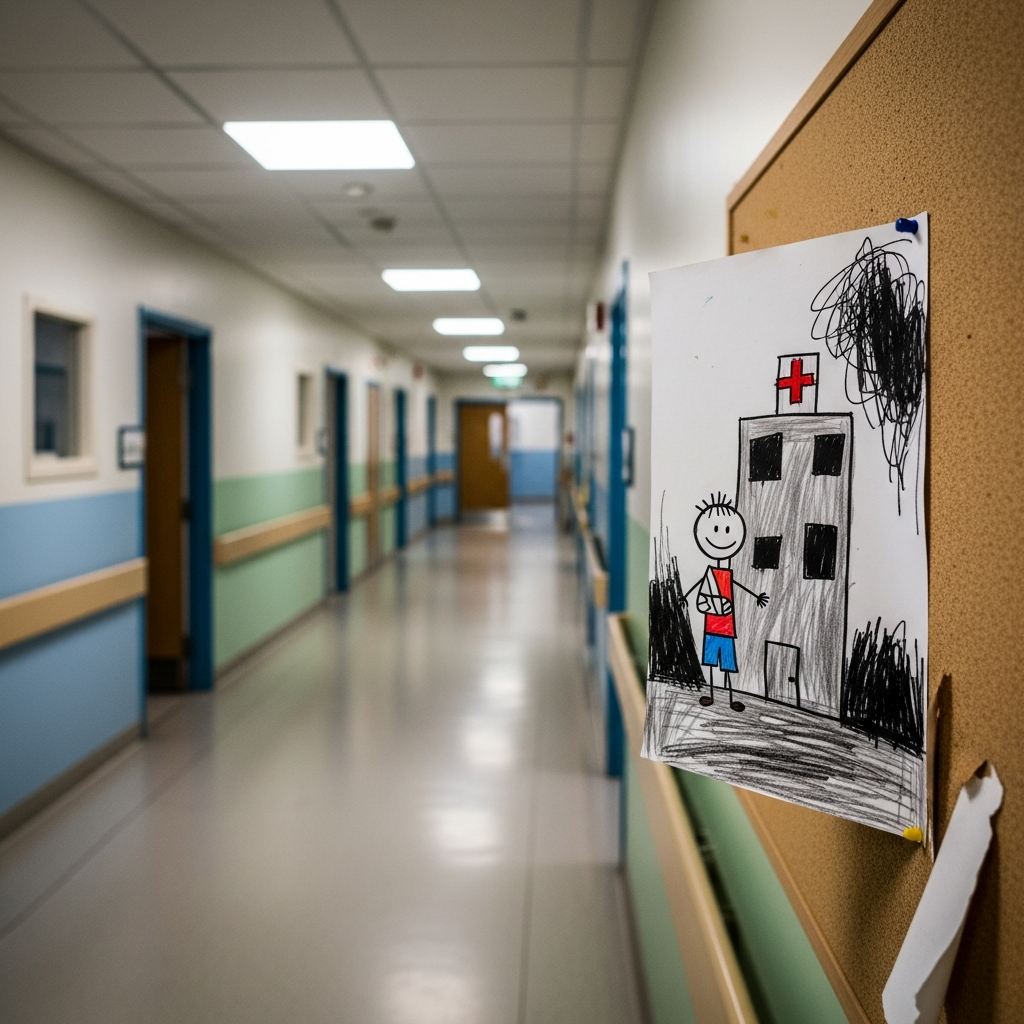
The Safeguard Hub: Fabricated or Induced Illness: what schools need to know
⚠️ One of the hardest forms of abuse to identify
Fabricated or Induced Illness (FII) involves a caregiver who uses the child's apparent ill-health as the instrument of abuse. The perpetrator typically presents as devoted, attentive, and medically knowledgeable, the very qualities that lead professionals to trust them. FII can cause serious, long-term harm, and in rare cases death. Schools are uniquely placed to observe the child independently of the carer and to detect patterns that no single medical professional sees in full.
What Is Fabricated or Induced Illness?
Fabricated or Induced Illness (FII) is a form of child abuse in which a caregiver, in the overwhelming majority of cases a mother or primary carer, causes harm to a child by convincing medical and welfare professionals that the child is more ill, disabled, or impaired than they actually are. [1] It was formerly known as Munchausen Syndrome by Proxy (MSbP) , a term still sometimes used in media reporting and older case law, though the RCPCH has moved away from it because it focuses on the perpetrator's psychology rather than the child's experience of harm.
FII results in emotional abuse and, depending on how the illness is induced, physical abuse and neglect. It subjects children to unnecessary, often invasive medical investigations and treatments. It deprives them of normal childhood experiences through manufactured disability or ill-health. In the most serious cases it involves deliberate physical harm: poisoning, suffocation, interference with medications or feeding tubes.
The RCPCH Three-Tier Framework
The Royal College of Paediatrics and Child Health (RCPCH) 2021 guidance , Perplexing Presentations and Fabricated or Induced Illness in Children , introduced a tiered framework that remains the definitive clinical reference for professionals in England and Wales. [1]
| Tier | Definition | Safeguarding response |
|---|---|---|
| Medically Unexplained Symptoms (MUS) | Symptoms without a clear organic cause. No indication of caregiver exaggeration or fabrication. Common and not inherently a safeguarding concern. | Standard clinical management. No CP action required at this stage. |
| Perplexing Presentations (PP) | Alerting signs are present : the child's actual health state is unclear, the carer's account doesn't fully align with clinical findings, but there is no immediate perceived risk of serious harm. Requires careful multi-agency monitoring. | Paediatrician leads. Multi-agency information sharing. School should record and report concerns to DSL. CP referral not yet required but should be reviewed regularly. |
| Fabricated or Induced Illness (FII) | The child is or is very likely to be harmed due to the caregiver's behaviour in order to convince professionals that the child's health is impaired. This is a child protection threshold. | Section 47 Children Act 1989 enquiry. Strategy discussion must include consultant paediatrician. DSL refers to MASH. Child may need to be separated from carer to assess true health. |
🔔 Why the PP tier matters
Perplexing Presentations are not FII, but they are a signal that something requires closer scrutiny. Many children who are eventually confirmed as FII victims were in the PP tier for months or years before the pattern became clear. The PP category exists precisely to prompt careful, documented, multi-agency monitoring before harm reaches the FII threshold, not as a reason to delay action if harm is occurring.
Forms of FII
FII takes three main forms, which may occur separately or in combination:
- Fabricated symptoms (false history) : the carer provides a false or exaggerated account of the child's symptoms to medical professionals. They may report seizures, allergic reactions, loss of consciousness, or chronic pain that no clinical examination can verify. Test results may be interfered with, for example by adding blood to a urine sample or contaminating specimens.
- Induced illness (physical harm) : the carer deliberately causes the child to become unwell. Methods include poisoning (administering medications, laxatives, salt, or other substances), partial suffocation (to induce apnoeic episodes), interference with intravenous lines or feeding tubes, or withholding food or necessary medications.
- Fabricated psychological or neurodevelopmental conditions : increasingly recognised. The carer presents the child as having ADHD, autism, learning difficulties, or mental health conditions that are not clinically verified, leading to unnecessary medications, educational interventions, or therapeutic referrals.
UK Data: What the Evidence Shows
Research on FII is difficult to conduct because of under-reporting, definitional variation between agencies, and the sensitive nature of allegations. The most comprehensive recent UK dataset is from Clements and Aiello (2023) , who surveyed 387 parents who had been subject to FII allegations, sent Freedom of Information requests to 51 local councils, and conducted analysis of FII training and guidance across children's services authorities. [2]
What the data doesn't tell us
The Clements and Aiello study has been important in highlighting both the scale of FII allegations and the high rate of cases not pursued, but it should be read carefully. A high rate of abandoned allegations does not necessarily mean the allegations were unfounded; it may reflect the difficulty of evidencing FII to the criminal or child protection threshold. The framing of some FII concerns as medical uncertainty about disabled children's needs has been criticised by disability advocates and parent groups. The RCPCH 2021 guidance explicitly warns against conflating FII with cases where parents are legitimately advocating for a child with complex needs.
Why FII Is Different from Other Forms of Abuse
FII presents a distinct set of professional challenges that make it harder to identify and act on than most other forms of child abuse:
- The abuser uses the professional systems as instruments of abuse. Hospitals, GPs, schools, and children's social care are enrolled, often unwittingly, in the perpetrator's narrative. Each medical referral, each hospital admission, each school meeting requested by the parent may be part of the pattern rather than a response to genuine need.
- Natural instinct works against identification. A parent who attends every appointment, records symptoms in meticulous detail, and advocates persistently for their child's medical needs is presenting as the ideal carer. Professionals are trained to support and validate such engagement, not to question it.
- Evidence is fragmented across multiple settings. The full picture only becomes visible when all the records are brought together: records from different GPs, different hospitals, different schools, different local authorities. No single professional sees the pattern; the child's medical history appears complex and chronic rather than manufactured.
- The harm may be invisible without separation. In many confirmed FII cases, the child's 'symptoms' disappeared almost immediately once they were separated from the carer. This separation test is medically significant but requires a legal framework to implement; it cannot be done casually.
- Professional paralysis is common. The combination of uncertainty, the stakes involved in a false allegation, and the persuasive presentation of the carer often produces inaction. Serious case reviews have repeatedly found that individual professionals had concerns for months or years before any action was taken.
What Schools May Observe
Schools cannot diagnose FII; that requires multi-agency medical assessment. But schools are in a uniquely valuable position: they see the child every day, independently of the carer, over months and years. The patterns schools observe are often the most compelling evidence available.
Attendance and absence patterns
- High rate of medically-justified absences across a sustained period, particularly where the stated conditions cannot be verified or vary frequently
- Absences concentrated around specific times: Monday mornings, days before school events or trips, days when the child would otherwise be in an activity they seem to enjoy
- Frequent parental requests to collect the child early, citing emerging illness, often without clinical corroboration
- Patterns of absence that correspond with school holidays or periods when the child would have been under the other parent's care. Notably, absences may reduce or cease during these periods.
The child's presentation at school
- The child appears healthier, more energetic, and more engaged at school than the carer has reported or the records suggest they should be
- The child gives inconsistent or contradictory accounts of their own health. They may seem uncertain what conditions they have, or may parrot back descriptions that seem beyond their developmental level.
- The child participates enthusiastically in physical activity that should be impossible or difficult given the reported conditions
- The child shows anxiety about going home, about medical appointments, or about specific interactions with the carer
- The child makes statements minimising the carer's account: "I'm fine really" or "Mum says I can't do PE but I feel okay"
Carer behaviour at school
- Frequent, detailed medical communications (letters from specialists, care plans, medication schedules) seeking school accommodations for conditions that school staff have not observed
- Pressure on school to withhold the child from activities (PE, trips, swimming) citing risks that other professionals have not raised
- Repeated requests for meetings with the SENCO or SENDCO about conditions not formally diagnosed, or where the school's own observations don't match the reported picture
- Attempts to involve school staff in administering complex medication regimes not prescribed through normal channels
- Negative reaction when school reports that the child has been well and active, or explicit discouragement of the child from reporting positive experiences at school.
✅ A crucial point about SEND and FII
Children with genuine complex needs, disabilities, or SEND may present with patterns that superficially resemble FII indicators. A parent who is a persistent medical advocate for a disabled child is not necessarily an FII perpetrator; they may be doing exactly what their child needs. The RCPCH 2021 guidance explicitly cautions against conflating the two. The key is the totality of the evidence, including medical records and the child's own presentation, assessed across agencies. Schools should record observations factually and share them with the DSL, never reach conclusions about FII independently.
Multi-Agency Threshold and Response
FII cases require a multi-agency response from the outset. Unlike many safeguarding concerns, FII must include health professionals, specifically a consultant paediatrician with expertise in the area, at every stage of the strategy discussion.
Under Working Together to Safeguard Children 2026 , the local authority must convene a strategy discussion when FII is suspected at or above the PP tier with safeguarding concern. The strategy discussion must:
- Include representation from children's social care, police, the relevant paediatrician, and the DSL or school representative
- Consider whether the child needs to be medically assessed in a setting away from the carer
- Agree an information-sharing plan, including what records each agency holds and how they will be consolidated.
- Assess risk to siblings, who may be subject to the same pattern of fabrication
- Agree whether Section 47 enquiries (child protection investigation) should be initiated
⚠️ Do not approach the parent with concerns
In all safeguarding cases, contacting the parent before a referral has been agreed with children's social care risks compromising the investigation. In FII cases this risk is particularly acute: the perpetrator may immediately move to a different area, a different set of medical professionals, or take the child out of school, destroying the evidential trail. Once you have concerns, the referral pathway is DSL to MASH, not a conversation with the parent.
What Schools Must Do
Record keeping
Meticulous records are often the most valuable contribution a school makes to an FII investigation. Schools should record:
- Every medically-justified absence, the reason given, and whether it was independently corroborated (e.g. appointment letter, medical certificate)
- The child's observed presentation on each day they attended: energy levels, mood, participation, any statements made about health.
- Every communication with the parent about the child's health: date, method, content, and who was present.
- Any discrepancies between the carer's account and the child's own presentation or statements
- All requests for medical accommodations, with dates and the basis cited
When a strategy discussion is convened
The school's DSL or a senior school representative may be asked to attend or contribute to a strategy discussion. In this context:
- Present factual, dated observations, not interpretations or conclusions about what is causing the pattern.
- Share the attendance record in full, including the pattern of absence types over time
- Describe accurately what the child is like at school: their participation, their statements, their apparent wellbeing
- Disclose any information shared by the child, using the child's exact words where possible.
- Do not speculate about the parent's motivations or mental health. That is a medical and investigative matter.
Protecting the child during an investigation
- Continue to treat the child with warmth and normality. They must not sense that school staff view them differently.
- Follow any guidance given by children's social care about what to tell the child or the parent
- If the child makes a disclosure during the investigation, record it immediately and inform the DSL
- Be alert to any escalation in the carer's behaviour towards school: increased pressure, threats, or sudden withdrawal of the child.
Legal and Statutory Framework
| Legislation / Guidance | Relevance to FII |
|---|---|
| Children Act 1989, s.47 | Duty of local authority to investigate where a child is suffering or likely to suffer significant harm. Triggers the formal CP investigation in confirmed or strongly suspected FII cases. |
| Working Together to Safeguard Children 2026 | Sets out the multi-agency framework for child protection, including the requirement for strategy discussions to include health professionals in complex cases. |
| Keeping Children Safe in Education (2026 from 1 September 2026) | Requires schools to act on any safeguarding concern involving significant harm without waiting for proof, and to cooperate fully with multi-agency child protection processes. FII falls under the physical abuse and emotional abuse categories. |
| RCPCH Guidance 2021 | Perplexing Presentations and Fabricated or Induced Illness in Children. The definitive clinical framework for the PP/FII spectrum. Should be read by DSLs in schools with active concerns. |
| Children and Social Work Act 2017 | Establishes the statutory safeguarding partners (local authority, police, and ICB) who must coordinate multi-agency responses to cases like FII. |
Common Questions
Can FII affect older children, not just infants?
Yes. While FII most commonly begins when children are under five, it can persist into adolescence. Older children may become complicit, either because they genuinely believe themselves to be ill after years of being told so, or because they are afraid of the consequences of contradicting the carer. Adolescent children who report symptoms inconsistent with any clinical finding, or who appear to have adopted a 'sick identity', may have been subjected to FII over many years.
What if the parent has a genuine mental health condition?
The perpetrator's own mental health needs are a separate matter from the child's need for protection. A parent may have a factitious disorder or health anxiety that contributes to the pattern, but this does not diminish the risk to the child, and it does not change the child's entitlement to protection. The existence of a parental mental health condition should be part of the multi-agency assessment, but it is not a reason to delay a child protection referral.
What about siblings?
Where FII is confirmed or strongly suspected, siblings must be assessed. In some serious case reviews, siblings have been found to have died in unexplained circumstances years before the identified child's FII was recognised. Any strategy discussion must include a review of all children in the household.
Is FII a criminal offence?
Yes. Depending on the form it takes, FII can constitute assault, administering a noxious substance, cruelty to a child (Children and Young Persons Act 1933), or other criminal offences. Police involvement is standard in all confirmed FII strategy discussions. A number of UK prosecutions have resulted in custodial sentences, though the complexity of the evidence means criminal proceedings are not always pursued even when the CP threshold is met.
What to Do and Who to Call
✅ If you have concerns about a child
- Do not approach the parent. This is essential in FII cases. Any warning to the perpetrator can destroy the evidence trail and put the child at greater risk.
- Speak to your DSL immediately. Record your concerns using the child's exact words where relevant, and ensure all attendance and observation records are secured.
- DSL refers to MASH . Children's social care will coordinate the multi-agency response. The referral must note the specific concern about FII so that a paediatrician is included in any strategy discussion.
- If immediate harm is suspected , for example if you believe a child has been or is about to be poisoned or physically harmed, call 999 immediately.
| Agency / Service | Contact |
|---|---|
| Your local MASH (Multi-Agency Safeguarding Hub) | gov.uk/report-child-abuse-to-local-council |
| NSPCC Helpline (professional advice) | 0808 800 5000 , 24 hours |
| Childline (for children) | 0800 1111 , 24 hours, free |
| Emergency services | 999 if child is in immediate danger |
| RCPCH FII guidance (clinical reference) | rcpch.ac.uk, PP & FII Guidance 2021 |
Sources and References
- Royal College of Paediatrics and Child Health (2021). Perplexing Presentations and Fabricated or Induced Illness in Children. RCPCH. Available at rcpch.ac.uk.
- Clements, L. & Aiello, A.L. (2023). Fabricated or Induced Illness: A Research Study. University of Leeds. Survey of 387 parents and FOI data from 51 local authorities.
- HM Government (2026). Working Together to Safeguard Children 2026. Department for Education.
- Department for Education. Keeping Children Safe in Education 2026. GOV.UK. (KCSIE 2026 was the version in force at time of original publication.)
- Bass, C. & Glaser, D. (2014). Early recognition and management of fabricated or induced illness in children. The Lancet, 383(9926), 1412, 1421.
This guide is for educational and professional development purposes. It does not constitute legal advice. All safeguarding decisions should be made by qualified DSLs in consultation with children's social care and, where relevant, health professionals. Statistics are drawn from primary sources cited above. Last reviewed: June 2026.